
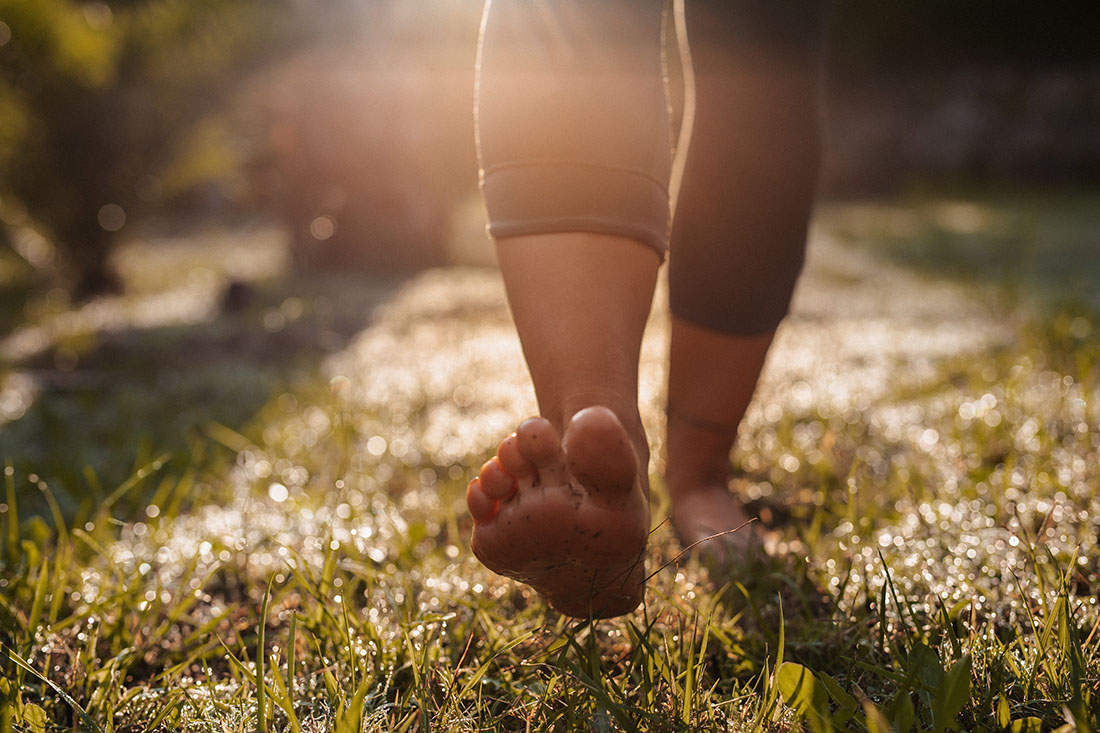
Earthing means to sync the body to the natural rhythms of the earth, and it is essential to be connected to the earth to restore and maintain health. When you touch the ground with your bare feet or body, it is called “grounding.”
Science Behind Earthing
There have been years of extensive research on the beneficial claims around earthing with the result being supportive. The Earth’s surface possesses a limitless and continuously renewed supply of free or mobile electrons which can be taken up into the body when bare feet or skin comes in contact with the earth. These electrons form antioxidant molecules which neutralize reactive oxygen species (ROS/free radicals) involved in the body’s immune and inflammatory responses.
The Earth is electrically conductive, and its negative potential is maintained by the global atmospheric electrical circuit which can create a stable internal bioelectrical environment for the normal functioning of all body systems. Oscillations of the intensity of the Earth’s potential may be important for setting the biological clocks regulating diurnal body rhythms, such as cortisol secretion.
Past to Present
Throughout history, humans mostly walked barefoot or with footwear made of animal skins. They slept on the ground or on skins. Through direct contact or through perspiration-moistened animal skins used as footwear or sleeping mats, the ground’s abundant free electrons were able to enter the body, which is electrically conductive. Through this mechanism, every part of the body could equilibrate with the electrical potential of the Earth, thereby stabilizing the electrical environment of all organs, tissues, and cells.
Modern lifestyle has increasingly separated humans from the primordial flow of Earth’s electrons. For example, since the 1960s, we have increasingly worn insulating rubber or plastic soled shoes, instead of the traditional leather fashioned from hides. Obviously, we no longer sleep on the ground as we did in times past.
During recent decades, chronic illness, immune disorders, and inflammatory diseases have increased dramatically, and some researchers have cited environmental factors as the cause. However, the possibility of modern disconnection with the Earth’s surface as a cause has not been considered. Much of the research reviewed in this paper points in that direction.
Ways to Earth
- Walk bare foot
- Swim in the ocean or lakes
- Garden with bare hands
- Lay on the Earth
- Hug a living tree
- Lean up against a living tree
- Sleep on the earth while camping
- Wear natural leather-soled shoes instead of synthetic rubber/plastic shoes
Benefits of Earthing
- Improve Sleep & Promote Deeper Sleep
- Reduce or Eliminate Chronic Pain
- Reduce Inflammation
- Increase Energy & Vitality
- Reduced Blood Viscosity
- Improved Blood Pressure
- Improve Cardiovascular Arrhythmias
- Improve Autoimmune Conditions: lupus, multiple sclerosis, & rheumatoid arthritis
- Speed Wound Healing
- Reduction of Primary Indicators of Osteoporosis
- Improvement of Glucose Regulation
- Reduce Stress & Anxiety
- Decrease Depressive Episodes
- Normalize Biological Rhythms
- Relieve Muscle Tension & Headaches
- Lessen Hormonal & Menstrual Symptoms
- Reduce or Eliminate Jet Lag
- Protect the body against potentially health disturbing environmental electromagnetic fields (EMFs)
- Accelerate recovery from intense athletic activity
If you are new to earthing, I would recommend you keep a journal to track improvements. Being mindful and recording data helps you see where there is improvement and reinforce the behavior. Numerous times I have assigned earthing as homework for my clients and the surprised reaction is priceless. Once they start doing it, they are hooked. The best part is there is an unlimited supply and free to all. Enjoy!